
If you underestimate demand
Inventory shortages
Demand higher than expected can leave you without products to serve your customers. This puts sales at risk, lowers the service level and creates inefficiency by triggering rush purchases or shipments.
Demand planning and supply chain
Connect your company's commercial, operational and financial planning.
If you underestimate demand
Demand higher than expected can leave you without products to serve your customers. This puts sales at risk, lowers the service level and creates inefficiency by triggering rush purchases or shipments.
If you overestimate demand
Buying or producing more than needed ties up capital and increases storage costs. It also raises the risk of obsolescence, expiry and shrinkage.
For trading, importing, distribution and manufacturing companies that need to anticipate demand and coordinate their purchasing, inventory and production.
Evaluate scenarios and make growth decisions with an integrated view of demand, operations and the capital required.
Plan what to buy, how much and when, taking into account demand, inventory and each supplier's lead times.
Anticipate production and replenishment needs to align product availability with operational capacity.
Bring commercial actions into planning and project their impact on sales, purchases and working capital.
We combine statistical models, commercial actions and your team's knowledge to build the forecast that guides your purchasing, production and supply decisions.
Models trained on historical data to identify trends and seasonality patterns.
Adds the expected impact of your company's commercial actions.
Your team reviews the proposal, makes the necessary adjustments and approves the forecast.
See the system's proposal, the adjustments made and the approved version to understand how the forecast was built.
Combine statistical analysis with commercial actions and your team's knowledge of the business.
Review and approve the forecast before using it as the basis for purchasing, production and supply decisions.
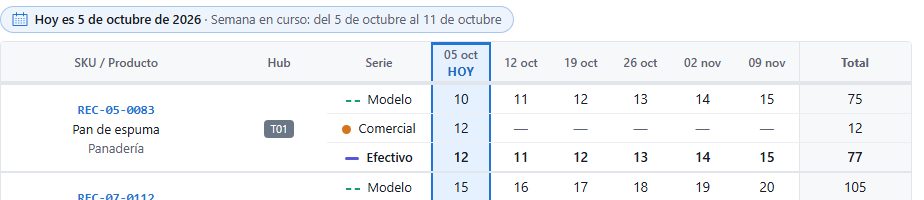
See forecast demand by product and location, with the level of detail your operation needs. Compare the statistical forecast with your team's estimates and add their adjustments to anticipate which products you will need, where and when.
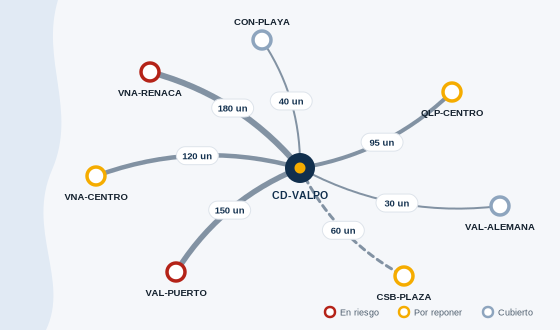
Plan transfers between distribution centers, warehouses and points of sale based on forecast demand and the inventory at each location. Review the suggested quantities, evaluate different scenarios and export the proposal to coordinate replenishment and get ahead of possible shortages.
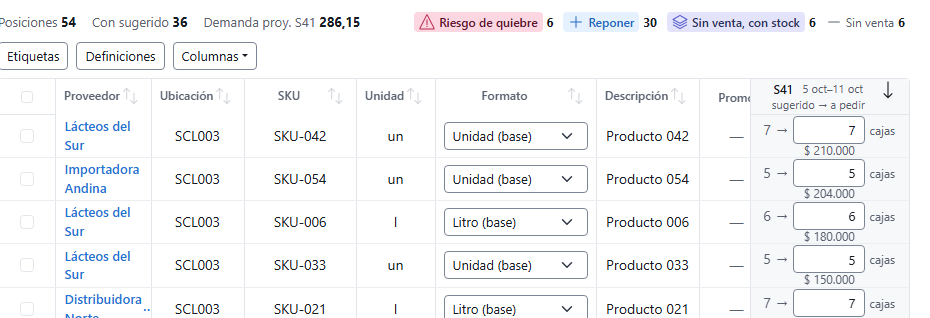
Plan what to buy, how much and when based on the approved forecast, available inventory and your suppliers' lead times. Adjust the suggested quantities to your inventory policies and purchasing terms, and use the alerts to prioritize the products that need attention.
If you produce what you sell, turn forecast demand into quantities to produce and plan how to supply each location.
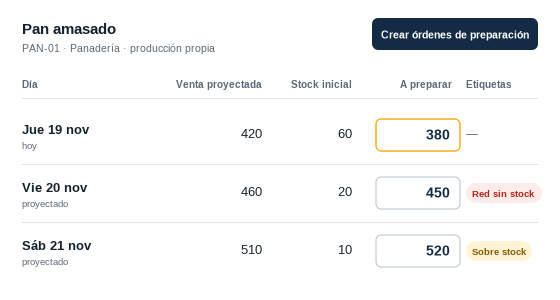
Plan how much of each product to produce and on which dates, based on forecast demand and the inventory across your supply network. Adjust the suggested quantities and export the plan to carry on with your production process.
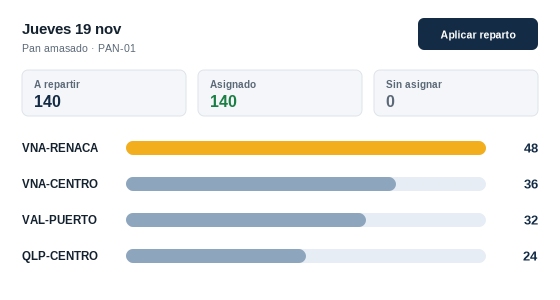
Distribute what was produced among your points of sale according to the needs of each location. Review and adjust the allocated quantities and export the result to coordinate dispatches.
Access 16 Layers from your computer, tablet or phone. Check your operation's information and follow up on planning, with no software to install.
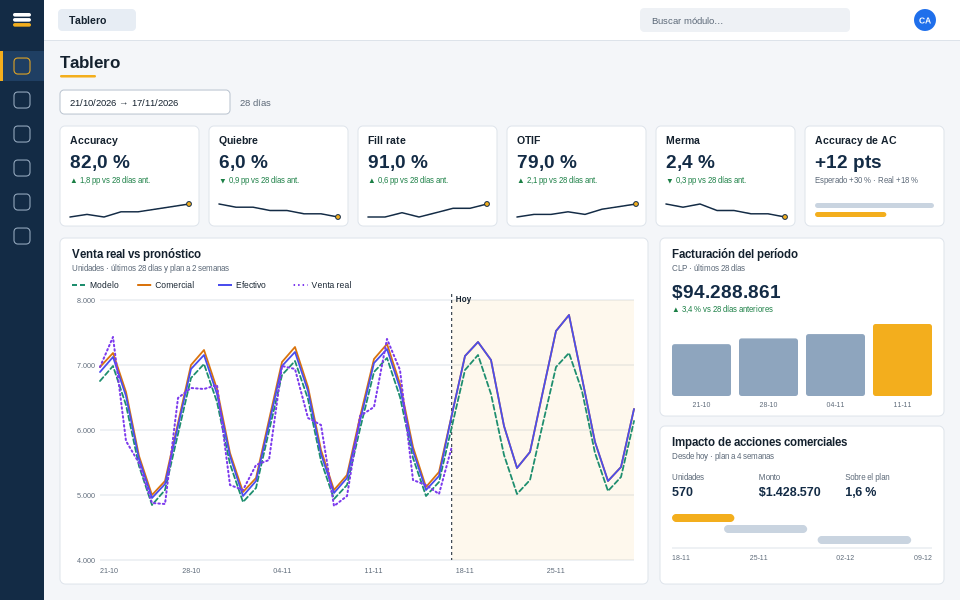
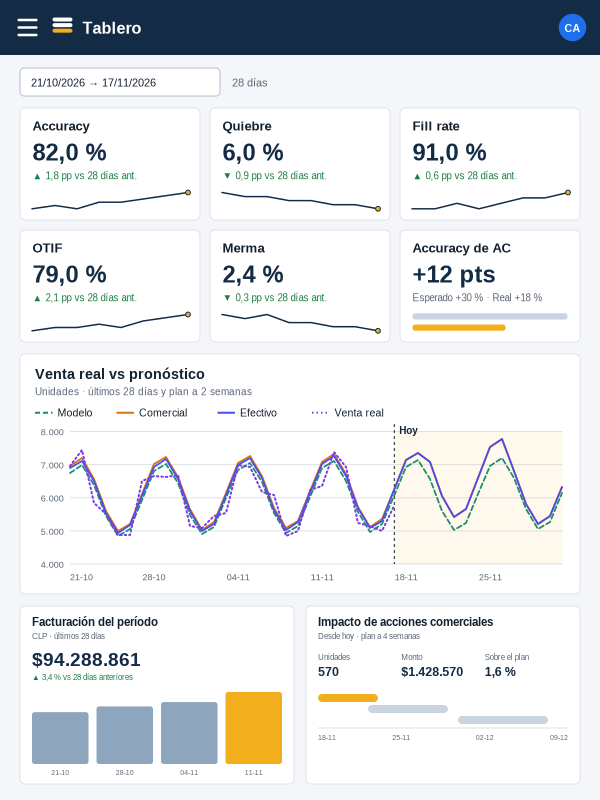
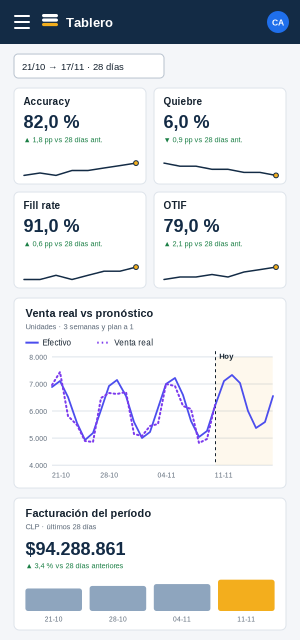
Together with the platform, you work with a 16 Layers consultant from implementation onward.
We adapt the configuration, validate real cases and prepare your users.
We resolve usage questions and technical and functional issues.
We analyze indicators, review criteria and evaluate adjustments with your team.
Models evaluated with your business's historical data before they are used.
Understand how the forecast is built and which adjustments it includes.
Connect planning with your processes, without replacing your systems.
Consulting, training and custom technology solutions, including artificial intelligence to automate tasks and support your decisions. Services available on their own or together with 16 Layers.
Your company's information is kept separate from other clients', with controls enforced in the database.
Your data is encrypted both in transit and while it is stored.
Each user accesses only their company's information, with permissions defined by their role.
The platform runs on Amazon Web Services (AWS), with automatic backups and no servers for you to buy or maintain.
Tell us what you need to improve in your company. Let's talk about how we can help you plan demand, coordinate supply or solve other challenges with consulting and technology.